IPL News · Distribution desk
PVR Inox sees ₹409 average ticket for live IPL screenings as multiplexes chase alternate content after Q1FY27 call
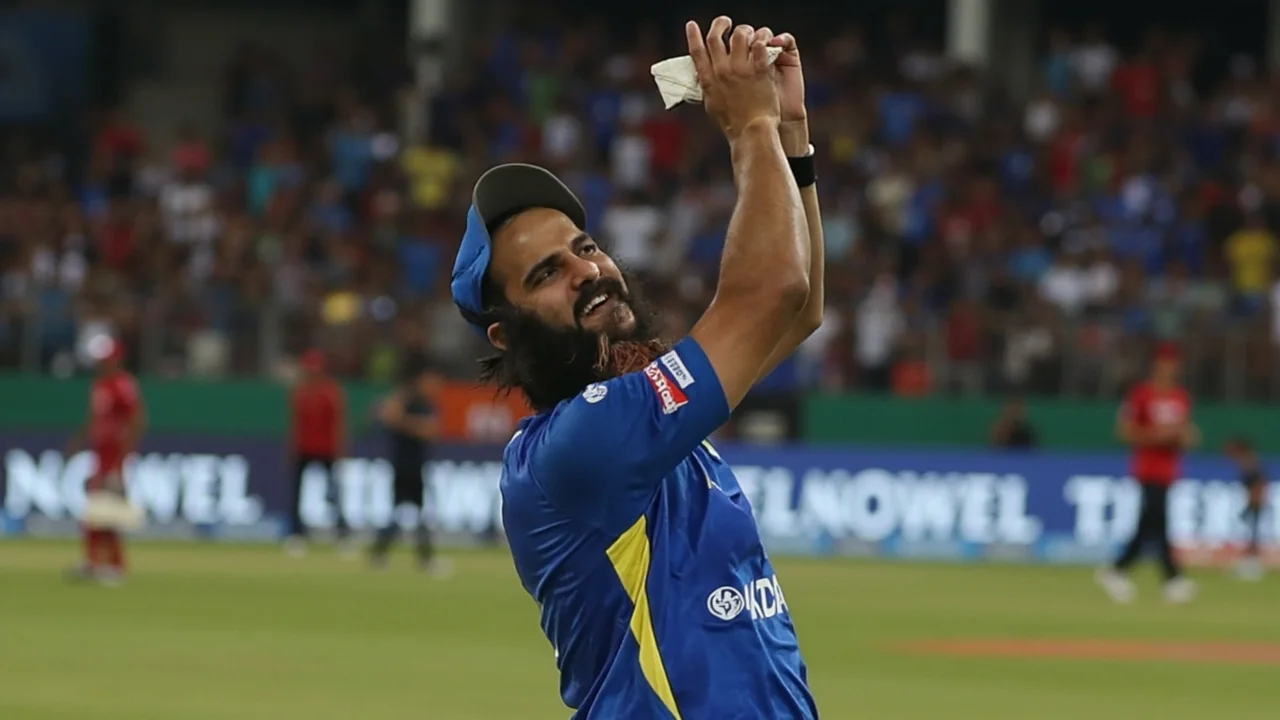
PVR Inox Managing Director Ajay Bijli told analysts on the chain's Q1FY27 earnings call on 3 August 2026 that live screenings of the Indian Premier League and the FIFA World Cup had received an encouraging response, and that the chain planned to widen its alternate-content slate beyond theatrical releases. The quarter's alternate-content and re-released classic film programming drew 250,000 admissions and contributed 1 per cent of PVR Inox's gross box-office collections, while pulling a sharply higher average ticket price than the company's overall mix.
That pricing gap is the clearest signal the call delivered. PVR Inox said the alternate-content events generated an average ticket price of ₹409, against ₹273 across the company's overall Q1FY27 admissions — a premium of roughly 50 per cent per seat on the same screens, on the same weeknights, with the same projector and concession stand. The chain operated 1,779 screens across 113 cities at the end of June, with a quarterly weighted average screen count of 1,718, giving the alternate programming a substantial physical footprint to fill on nights that would otherwise have run empty between theatrical windows.
Bijli framed the experiment as a response to two pressures at once: stretched gaps between tentpole Bollywood releases and a fast-growing live-events economy outside the cinema. The call's broader narrative was that alternate content is not a stop-gap for slow weeks but a parallel programming line the chain intends to invest in — and the IPL, with its compressed two-month season and guaranteed marquee nights, sits at the front of that pipeline.
The ₹409 ticket tells the story of marquee scarcity
An average ticket price of ₹409 against an overall ₹273 is not just a percentage gap. It reflects what audiences are willing to pay to watch a specific event on a specific night. PVR Inox does not break out individual IPL screening prices in the disclosure, but the chain's pricing pattern on alternate content has historically tiered marquee nights — IPL playoff weekends, the FIFA World Cup final, Coldplay-style concert films — above the run-of-the-weekday catalog. A 50 per cent premium on a sold-out 200-seat screen is roughly ₹27,000 of incremental revenue per show, and the 250,000 admissions figure implies that premium was paid consistently across the quarter, not just at the headline fixtures.
The economics work for the chain because the cost of programming a live feed is largely a flat rights-and-licensing line plus a small staffing surcharge, not the per-screen print and advertising cost that a Bollywood release carries. On a 200-seat screen with 75 per cent utilisation, an average ticket of ₹409 generates around ₹61,000 of gross box office. Against an overall chain average of ₹273, that same screen would generate roughly ₹40,000. The 50 per cent uplift lands almost entirely on the contribution-margin line, which is why the chain is willing to dedicate midweek slots that would otherwise have been dark.
That is also why the 1 per cent gross-box-office contribution reads as a floor, not a ceiling. The figure covers only the quarter in question — late spring, before the IPL's playoff windows and before any concert-film windows in the second half of the year. PVR Inox said on the call that it planned to expand the slate, with screenings to be announced in line with marquee rights windows as those events are confirmed.
Why multiplexes are willing to break the 200-seat mould
Cinema economics in India are built around the 200-plus-seat single-screen auditorium running four shows a day. That model assumes a steady flow of theatrical releases that draw family audiences and front-load weekend evenings. When the release calendar goes thin — the back half of a release cycle, the gap between Eid and Independence Day windows, the weeks between major franchise drops — those screens go partially empty, and an empty seat costs roughly the same as a full one because the operating expense line is fixed.
Live IPL screenings disrupt that cost equation by drawing a different audience on a different schedule. A 7:30 PM IPL match on a weeknight is the kind of slot a Bollywood weekday matinee will not fill. The audience skews older and more male than a family weekend show, and the dwell time at the concession counter is shorter because the focus is the screen. None of that is bad for the chain if the seat is full and the average ticket carries a premium. PVR Inox's call reads the data in that direction: the alternate-content programming is being used to fill a schedule slot the existing theatrical pipeline cannot fill at the same revenue.
PVR Inox reported 25.3 per cent occupancy in the quarter, up from 22 per cent a year earlier. The chain attributed part of that improvement to alternate content and re-releases of older films, alongside the new release slate. Occupancy is the single most-watched operating metric for Indian multiplex chains because it drives both per-screen revenue and the negotiation of upstream studio splits. A 3.3 percentage-point swing is meaningful in a business where double-digit moves are rare.
What the Ficci-EY numbers say about the live-events backdrop
The earnings call was made against a wider backdrop documented in the Ficci-EY India media and entertainment report, cited in the original coverage of PVR Inox's disclosure. India's media and entertainment sector grew 9 per cent to ₹2.78 trillion in 2025, according to that report. Within that, organised live events grew 44 per cent, an outsized reading that captures everything from Coldplay's Ahmedabad shows to standalone cricket fan parks and corporate hospitality nights.
For multiplex chains, the 44 per cent live-events growth is a competitive signal. The same audience that will pay ₹409 for a live IPL screening at PVR Inox will also pay to be in a stadium, in a fan park, or in a dedicated live-events venue. The cinema's pitch is convenience and quality — a guaranteed seat, climate control, a better picture than a fan-park LED wall, and no parking or transit penalty. That pitch works for marquee nights and works less well for routine fixtures, which is exactly why the ₹409 figure clusters on the marquee tier rather than across the IPL calendar.
The cold read on the call is that multiplexes are positioning themselves as a third option between stadium attendance and home streaming. The chain cannot match the atmosphere of a sold-out Wankhede or Eden Gardens, and it does not need to. It is selling the clean-screen, big-seat, climate-controlled version of the same match, with a ticket that prices below premium hospitality but above a standard weekday theatrical seat.
What the BookMyShow read adds
BookMyShow's cinema chief commented separately on the broader pattern. The BookMyShow position is that fandom-led concert films and live marquee sports screenings can bring communities together and reproduce some of the excitement of being at a stadium. The framing matters because BookMyShow is the dominant ticketing intermediary for both multiplexes and live events in India, and a positive signal from that side implies upstream demand — fans searching, clicking, and committing to a ticket for a non-theatrical event at a cinema — that supports the chain's pricing.
The BookMyShow read also lines up with the Ficci-EY 44 per cent live-events growth. When fans are paying fan-park prices and stadium prices elsewhere in the calendar, the multiplex version of the same match becomes a price-conscious but quality-conscious alternative. The market is not zero-sum. There is room for a stadium ticket, a fan park ticket, a multiplex ticket, and a home-streaming subscription in the same week, because each delivers a different version of the experience and the audience splits accordingly.
For BookMyShow, the multiplex screening is also a category extension. The platform already sells stadium tickets, fan-park tickets, and concert tickets. Adding multiplex-screening tickets for marquee nights turns the platform into a single funnel for the full event-attendance stack, with the cinema screen sitting in the middle of the price ladder. That positioning is what the cinema chief was pointing at when he described the experience of being at a stadium — the pitch is that multiplexes can credibly reproduce some of that energy on a 30-foot screen.
What the IPL brings that other live rights do not
The IPL is the single most concentrated live-rights property on the Indian calendar. Two months, 74 matches, ten franchises, every match in prime evening slot, and a guaranteed prime-time audience that advertisers can target by city and team. The compression matters for multiplexes because rights windows for one-off events — a Coldplay tour stop, a UFC pay-per-view, a Taylor Swift concert film — are short, the marketing lead-time is brutal, and the audience expectation is high. The IPL gives multiplexes a known schedule they can plan around months in advance.
For fans who follow the IPL closely, the multiplex screening is also a different kind of social event than the home-streaming version. A 200-seat cinema with a 7:30 PM match on a weeknight pulls groups that would otherwise be split across WhatsApp video calls and disjoint living rooms. The communal viewing experience is the closest an Indian city-dweller can get to a stadium atmosphere without the travel cost. The BookMyShow framing of "communities coming together" reads in that direction.
PVR Inox's reading of the IPL screening business, as laid out on the Q1FY27 call, is consistent with the wider pattern: live sports and live concert films command a premium ticket, fill a slot the chain would otherwise have to discount, and bring a different demographic into the building on weeknights. The combination of marquee rights and a captive audience justifies the 50 per cent ticket uplift over the standard weekday multiplex average.
The screen-count arithmetic behind the Q1FY27 print
PVR Inox's 1,779-screen footprint at the end of June is the largest in Indian cinema. A 1 per cent gross-box-office contribution from alternate content on that footprint translates to a real audience. The 250,000-admissions figure implies an average of roughly 141 admissions per screen across the quarter from alternate content and re-releases. On a subset of screens that actually ran the alternate programming, the per-screen number is materially higher, because not every screen in the chain switches to alternate content on any given night.
The quarterly weighted average screen count of 1,718 sits 61 below the end-June number, which reflects screens opened, closed, or temporarily out of service during the quarter. That difference is small enough that the chain's revenue base is stable quarter over quarter, and any growth in per-screen revenue is a function of pricing and content mix rather than capacity expansion. For an investor looking at the Q1FY27 print, the relevant question is whether alternate-content programming is a margin-accretive line that can grow on the same screen base without requiring new builds.
The 25.3 per cent occupancy figure, up from 22 per cent a year earlier, supports that read. A 3.3 percentage-point swing in occupancy is large by the standards of Indian multiplex chains, where typical year-on-year moves are 0.5 to 1.5 percentage points. The chain attributed the swing to a combination of new releases, alternate content, and re-releases. Even if only half of the 3.3-point lift is attributable to alternate programming, that is still a 1.5-point occupancy contribution from a category that did not exist in any meaningful form two years ago.
What to watch from the next marquee window
The clean forward question for fantasy desks and live-events watchers is whether the ₹409 average ticket holds into the next marquee window. PVR Inox's call signalled an expanded alternate-content slate but did not name specific properties beyond the IPL and FIFA World Cup. The slate's next test will come during the IPL playoff windows in late May and early June 2027, and during any confirmed Coldplay-style concert-film windows in the second half of 2026.
For fans following the IPL 2026 calendar and the live match feed across the season, the multiplex screening is a parallel viewing option that did not exist at scale a few years ago. The signal from the Q1FY27 print is that the chain wants more of it, the audience is willing to pay for it, and the operating model can absorb it without cannibalising theatrical releases. The combination of those three signals is what an alternate-content category needs to grow beyond a one-quarter experiment.
The clearest read from the Q1FY27 disclosure is that live marquee sports screenings, anchored by the IPL, are now a structural category for Indian multiplex chains rather than a stop-gap. The ₹409 average ticket, the 250,000 admissions, and the 1 per cent gross-box-office contribution all point in the same direction. The next quarter will show whether the expansion Bijli outlined on the call turns into a wider slate or settles back into the existing marquee tier.