IPL News · Valuation desk
RCB and Rajasthan Royals sales push IPL business value to $20.6 billion in Houlihan Lokey 2026 study
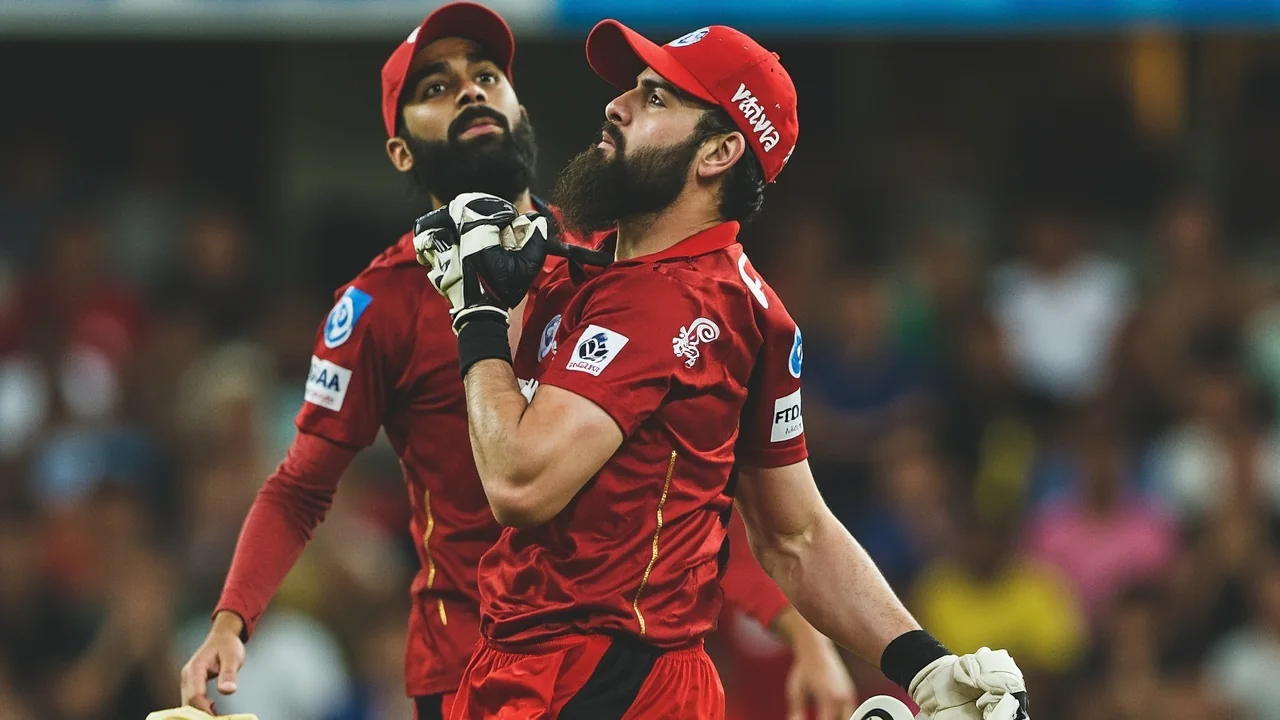
Houlihan Lokey's 2026 IPL Valuation Study puts the Indian Premier League's overall business value at $20.6 billion, up 11.4% year on year, and lifts the league's stand-alone brand value to $4.3 billion, up 10.3%. The release on 29 July 2026 credits record franchise sales of Royal Challengers Bengaluru and Rajasthan Royals for the jump, with the two transactions together worth $3.43 billion.
Royal Challengers Bengaluru changed hands in March 2026 for $1.78 billion, sold to a consortium made up of Aditya Birla Group, the Times of India Group, David Blitzer's Bolt Ventures and Blackstone's BXPE. That number alone makes the RCB sale the most expensive single IPL franchise transaction on record. Two months later, in May 2026, Rajasthan Royals went for $1.65 billion to the Mittal family and Serum Institute of India chief executive Adar Poonawalla, after an earlier Kal Somani-led United States consortium deal collapsed during its exclusivity window.
For a league that only crossed the billion-dollar mark for one franchise a few cycles ago, two nine-figure sales inside a single quarter reset the price curve. Houlihan Lokey's franchise rankings now have RCB at the top in both brand value and business value, the first time it has led the table in either column.
RCB climbs to the top of the franchise table
Royal Challengers Bengaluru moved to number one in the 2026 franchise rankings on the back of two titles in quick succession. The men's side lifted the IPL trophy, and the franchise's Women's Premier League arm also won, giving RCB the rare double. Houlihan Lokey values RCB's brand worth at $312 million, up 16% on the previous year. The combination of on-field silverware, a marquee city in Bengaluru and a buyer group that includes one of India's largest conglomerates and a global alternatives investor is what pushed the franchise past the established commercial leaders.
Rajasthan Royals' sale is the other inflection point. The Mittal-Poonawalla bid at $1.65 billion is the second-largest single-franchise price in the league's history, and it cleared a complicated runway. The earlier consortium fronted by Kal Somani had moved into exclusivity before the deal unravelled, leaving the franchise back on the market inside the same calendar year. That the sale closed at a higher price than the previous benchmark for Royals tells bidders and sellers how much weight the central rights pool now carries.
The numbers behind the $20.6 billion headline
Business value in the Houlihan Lokey model captures the league as a going concern: media rights, sponsorship inventory, ticketing, merchandise, and a slice of each franchise's local revenue. The 11.4% jump on the 2025 reading is the second consecutive year of double-digit growth for that headline. Brand value, which strips out on-field operating earnings, rose 10.3% to $4.3 billion. The pair of metrics moving in the same direction, at the same pace, is the point Houlihan Lokey is making about durability.
Total reach across television and digital platforms reached 1.06 billion screens, up 7% year on year. Linear television ratings dropped 18.8%, and average per-match TV viewership fell 26%. Houlihan Lokey reads that pattern as a migration to new screens rather than a drop in audience: the screens are bigger and time spent is moving to connected devices, which changes who buys inventory and how it is priced.
Total IPL 2026 revenue, including the BCCI's broadcasting rights, sponsorship tiers and gate receipts across venues, is projected to exceed $1.8 billion. Per the Houlihan Lokey report, only the National Football League outranks the IPL on a per-match basis worldwide, and that gap has narrowed as the IPL's central rights pool has compounded.
What the ownership rules let bidders do
The Board of Control for Cricket in India does not impose an equity ceiling on private buyers of an IPL franchise, and it does not require any minimum hold period before a sale. North American and European leagues put guardrails around that, and the contrast is sharp. The National Football League lets a single fund hold at most 10% of a team. The National Basketball Association caps institutional ownership at 20%. Germany's Bundesliga applies a 50+1 rule that keeps majority voting control with supporters and limits outside investors to a minority economic stake. None of those rules bind inside the IPL framework, and that openness is what lets bidder groups form quickly when a franchise comes to market.
That openness explains the buyer profile. The RCB consortium brought Blackstone's BXPE and Bolt Ventures alongside an Indian conglomerate and a media house. The Royals' buyers included the Mittal family, who control ArcelorMittal, and Adar Poonawalla, the Serum Institute of India chief executive whose vaccine business sits at the centre of India's pharmaceutical export story. Harsh Talikoti, a director in Houlihan Lokey's financial and valuation advisory business, said the league's appeal tracks to the quality of buyers it attracts, naming Blackstone, Aditya Birla Group, ArcelorMittal, Serum Institute and David Blitzer.
Each franchise also collects about $55 million a year from the central rights pool that the BCCI negotiates on the league's behalf, before any team-level revenue is layered on. Houlihan Lokey framed that base as a contracted annuity: a stable income line that keeps flowing through weak seasons, ownership transitions and front-office turnover.
Where the next billion comes from: the 2028-32 rights cycle
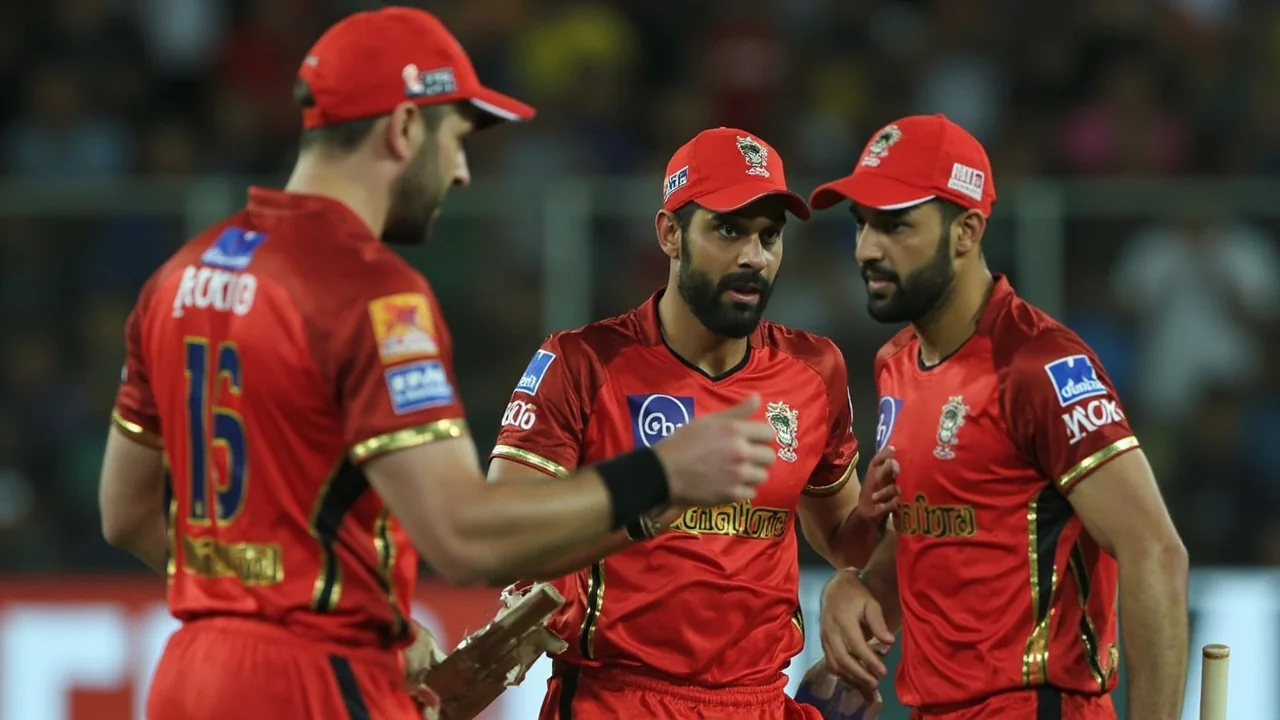
The current IPL media rights cycle is valued at $6.2 billion and runs through 2027. Houlihan Lokey projects the 2028-32 cycle could grow 80% to 100% over the existing number, citing an 18% compound annual growth rate in rights value since 2008. If the projection lands inside the band, the new cycle alone adds a multiple of the current central pool.
The rights path is the single biggest driver of franchise business values. Sponsorship tiers, ticketing and merchandise scale with the broadcast envelope. The structural protections the BCCI gives franchisees — no equity cap, no minimum hold, no foreign-ownership restriction — keep the bidder list deep. If a bidder walks away from one franchise, the next group can move in quickly because there is no waiting period for league approval.
What fantasy desks should take from this
For fantasy managers following IPL news and match desk updates, the valuation study is a backdrop, not a lock-time signal. But three numbers matter for the months ahead.
First, RCB's commercial scale has caught up with its on-field profile. A franchise that just won the men's title and the WPL title, with a buyer consortium of this breadth, will spend to defend. Expect bidding aggression at the next auction and a fuller overseas bench than the previous cycle. For fantasy managers, that translates into a deeper talent pool in Bengaluru's squad, fewer bench-window blank weeks, and captain candidates spread across both innings and the bowling attack. The buyer group also has the cash to bring in impact replacements mid-season if the auction list leaves a hole.
Second, the Rajasthan Royals' new ownership will run the franchise for the long term. The Mittal-Poonawalla combination has the balance sheet to absorb short competitive dips without the kind of cost-cutting that disrupts fantasy value. Royals' overseas slots and Indian core pieces become a more stable read than they have been in several seasons. For contest builders, that stability reduces the noise around late-window role swaps. A franchise that does not need to retrench can keep faith with its batting order through a slow patch rather than reach for the churn button.
Third, the platform-migration signal matters for how fan engagement is measured. Linear TV ratings falling 26% while total reach grew 7% means the league is not shrinking — it is shifting screens. Fantasy engagement tends to follow attention, and digital-first match windows tend to bring in younger and more transactional fantasy players. That changes contest entry patterns through the business end of the season. It also shifts which sponsors pay a premium for in-app inventory versus broadcast spots, which is why Houlihan Lokey's read on the migration matters beyond the headline reach number.
There is a second-order fantasy read as well. The central rights pool sends roughly $55 million a year to each franchise before a single rupee of team-level revenue is added, and that base layer sets the floor under any bid a franchise can justify. A new bidder group is paying for that contracted income plus upside, so the floor of what a fantasy manager should assume a top franchise can spend is meaningfully higher than it was two cycles ago. Player retention deals, impact-player windows and overseas acquisitions all sit on top of that base.
Why the buyer mix is itself a market signal
The composition of the RCB and Rajasthan Royals buyer groups tells a story the headline price does not. RCB's consortium is a four-way combination: an Indian conglomerate in Aditya Birla Group, a legacy media house in the Times of India Group, a global sports investor in David Blitzer's Bolt Ventures, and an alternative-asset manager in Blackstone's BXPE. Each partner brings a different kind of capital. Aditya Birla brings balance sheet and Indian consumer reach. Times of India brings broadcast adjacency. Blitzer brings sports portfolio logic from the United States and Europe. Blackstone brings institutional scale and the patience to ride out a rebuild if one is needed.
Rajasthan Royals' buyers split differently. The Mittal family controls ArcelorMittal, the world's second-largest steelmaker, with operations across continents. Adar Poonawalla runs Serum Institute of India, the world's largest vaccine manufacturer by number of doses. The combined balance sheet can absorb a cycle of competitive drift without forcing sales. Both buyers are also exposed to Indian consumer growth through their other businesses, which gives them a strategic reason to be visible in the country's most-watched sporting property.
When Harsh Talikoti at Houlihan Lokey pointed to the quality of buyers lining up, he was making a valuation argument that goes beyond price. The league attracts buyers who can clear the cheque and remain through the next rights cycle. That is the structural reason a per-match reading now leaves the IPL as the second-ranked property worldwide, trailing only the National Football League.
What the structural comparison with the NFL, NBA and Bundesliga reveals
Houlihan Lokey's structural analysis lines up the IPL's ownership rules against three of the world's most valuable sports leagues. The NFL lets a single fund hold at most 10% of a team. The NBA caps institutional ownership at 20%. The Bundesliga applies a 50+1 rule that keeps majority voting control with supporters and limits commercial buyers to a minority stake. The IPL, by contrast, has no equity ceiling on private buyers and no minimum hold period, which is a deliberate commercial choice rather than an oversight.
Those open rules do not produce a higher base price on their own. They produce a deeper bidder list because the universe of acceptable buyers is wider. A sovereign-wealth-backed fund, a family office with a 20-year horizon, or a global sports platform can all underwrite a franchise in full because no league rule limits their stake. The BCCI's openness is a feature of the league's commercial design, not an oversight.
It does carry a downside. Open ownership rules mean that mid-cycle ownership changes are easier. The Rajasthan Royals' experience this year — a first deal collapsed during exclusivity, a second closed at a higher price — is the kind of disruption a tighter cap would have softened. Open rules also concentrate commercial decision-making in fewer hands, which can produce swings in franchise strategy between cycles if a new buyer wants a faster return on capital.
For the league itself, the trade-off has worked. Average franchise business values keep rising, the central media pool compounds, and bidder depth remains a competitive advantage when the next rights cycle comes up for auction. The 2026 study reads as a defence of that open structure.
The per-match case that ranks the IPL just below the NFL
The Houlihan Lokey report ranks the IPL second only to the National Football League on a per-match basis worldwide. That is the single most cited forward-looking claim in the release. The argument rests on three measurable inputs: the contracted media rights annuity that flows to each franchise, the headline reach of 1.06 billion screens across television and digital, and the screen-migration pattern that keeps total reach growing even as linear ratings fall.
The per-match comparison is not the same as a per-team or per-season comparison. The NFL runs a 17-game regular season per team, which limits the inventory of premium windows. The IPL runs a longer season across more teams, and the central media pool spreads across the league. The per-match ratio favours properties where each match is a national event. The IPL has built that through compressed windows, marquee nights, and a finals structure that keeps late-season matches at peak viewership.
For fantasy engagement, the per-match gravity is the reason captain picks and differential captain bets work as contest categories. If the IPL is not a per-match global leader, those contest categories lose their edge. The valuation study, in that sense, is a quantitative defence of the contest design choices that fantasy desks already make.
What the 2028-32 auction will be tested against
The clean forward question is whether the 2028-32 media rights auction validates the Houlihan Lokey projection. Rights cycles in India have grown without interruption at an 18% compound rate since 2008, but each cycle is tested by the bidding depth the league can prove in advance. RCB and Rajasthan Royals will be the proof points the next bidder group cites.
Two transactions inside a single quarter reset what a franchise can clear. The 2026 study closes with RCB at the top of the rankings and the Royals still inside the top tier. Both are now anchored by buyers who plan to hold. The next valuation cycle will read out against that floor.